Wednesday, November 17, 2010

Virtual Shopping

The commercializing of products have expanded its sales to Virtual Worlds like SecondLife, allowing online users to purchase online products using virtual currency bought using actual cash. Players can then customize their personal avatars using these bought products.

I was interested in how the system of online transactions worked, hence trying my hand in doing some virtual shopping. Secondlife being the server of my choice, I begin my exploration with an open mind, putting aside all subjective views relative to the virtual world.

Without a clue about where I could find places that dealt with online purchases, I used the 'Teleport' function to tour around locations where I thought I could try my luck at virtual shopping.

Organized neatly into their respective sections, players can choose their desired type of purchase. A feature allows players to save these places as 'landmarks' for future references as well.


The products sold in Secondlife range from the latest trends in clothes to accessories like earrings and necklaces.


One of my favourite and most interesting stalls I happened to stumble upon was called 'SCRIPTOY', It was a stall selling a wide array of toys and accessories. Although first impressions of the stall were inappropriately juvenile, items sold at the stall were catered towards adults. Items like cigarettes, alcohol, and customizable 'beer taps' were sold and could be used as accessories at a hangout.


Apparel merchandise appealing to both sexes are sold on display screens as shown in the picture above. Players can conveniently scroll through the different designs, taking leisure time to a whole new level.


Whole buildings are specifically dedicated to excessive shoppers. Hundreds of customized avatar presets can be purchased off a neatly organized display. Players can 'teleport' to specially designed web spaces like this to do their virtual shopping.

In conclusion, people who have a desire for materialistic 'wants' but can't afford them in real life can resort to virtual worlds as a go-to alternative. However as an individual, I feel that this method of stress relief and meeting their wants are an indirect attempt in fueling their greed and gluttony.

Tuesday, November 16, 2010

Virtual Holiday

This post is a virtual response to my earlier post about my dream holiday. Since my dream won't be realised til im older, I thought visiting Amsterdam using Secondlife was an interesting idea. Secondlife allows its users to instantly teleport to places they want to go to, including there is such a virtual world created. I can conveniently teleport and tour around the simulated version of Amsterdam, checking out their famous sites and lifestyles.

Sports car and an ATV off-road bike? If only this was purchasable.
Breast Cancer aid in a virtual world? Users can use their online currency to make donations to this foundation.

A couple of structural buildings I saw while touring around Amsterdam in Secondlife. I wonder if there really are places like this in real life Amsterdam. If there is, the moderators and creators have really done a good job in constructing these structural beauty's.
Dozens of shops situated by the famous canal in Amsterdam, running along its path that covers a full quarter of the city. Avatars can walk around the pathways, enjoying the scenery and purchasable items in these little stalls.

The famous canal of Amsterdam. Who says these boats are only decorative? Players can hop into these 'couple' boats and glide across the watery canals around the city, enjoying the scenery and some alone time.

Just like in real life, players actually put up rooms and spaces for rent. With a settled amount of online currency, other players can use this space to set up their own stalls or virtual homes.

THE RED LIGHT DISTRICT. I never knew they would have one in virtual life. This proves the realism of Secondlife, where the traditions and cultures of real life are implemented to its most realistic ways.

There is even a small informative stall that educates players of famous figures and role models of the past, examples like Mahatma Ghandi and his accomplishments are spewed across the wall. A list of FAQ's can be access as well, establishing a firm foundation of information in Secondlife.

Unfortunately, however realistic Secondlife may get, it can never be personal experience. Secondlife may be able to recreate animated structures and buildings, but it can never create a bond of unexplainable emotions and feelings that people obtain when experiencing something first-hand. I'd praise Secondlife for its futile attempt in recreating a simulated world, but nothing beats personal and first hand experience.

Reflection (Tutorial 1 & 2)

Facebook is a social networking site that has gained massive recognition since it's birth in February 4, 2004. Word of Facebook spread like wildfire, constantly gaining popularity around the word. The various races and cultures can easily relate to using Facebook because of it's alluring applications and purpose, connecting people around the world.

For lesson today, we had to use facebook as our source of discussion. Students had to search for the EIR fan page on Facebook, 'like' it and post our personal thoughts and feelings of a related topic. We discussed about the effects of the Internet on the youth, whether it's advantages outweighs it's disadvantages and vice versa.

The Internet, being an open source for users world-wide, it is common practice for the millions of them to use freedom of speech. As it is already customary to do so, expressing my views on the topic in Facebook was second nature. With a bit of humility and an open mind, individuality poses minimal harm to subjective minds. Online discussions will initially have it's toll in the long run as basic skills like public speaking and face-to-face interaction are not made use of. Virtual interaction, in excess, is certainly a disadvantage. The only advantage i can think of is being in the comfort of my home and saving the trouble of traveling around.

I admit that this exercise provides decent exposure to alternative forms of interaction. However, online interaction should never be a primary option, but a way of accessing information more conveniently.

Monday, November 15, 2010

Reflection (Practical 8 & 9)

We learnt how to evaluate online resources in class today, differentiating the reliability, relevance and usefulness of a source. For this practical, we were taught how to recognize the factors that affects these 3 values in looking for information online

I'll break the factors down to what I feel they represent.


Purpose - What is the aim of this website and is there a message it is trying to put across?
Coverage - What topics or category does this information fall into and is it relevant?
Authority - Is this website reliable in terms of authority, relevance and reference?
Accuracy - Can the information in this website be trusted? Are they accurate and factual (through surveys, polls,  statistics, etc.) or just blind assumptions and suggestions?
Currency - Are the information in this website updated regularly? Are they relevant to the latest issues?
Accessibility - How easy is it to access this website? Is it open to view for the public or restricted to authorized members only?
Presentation and Management - Is the layout of the website presentable? Are there any special features that aid in the use of the website?
Usability - How user-friendly is the website? Is navigating through the information and links convenient or difficult to understand?

After going through the factors that I have just stated, I can easily identify the advantages and disadvantages of an internet source. This is useful as I can apply this skill to my future online references and research. I also realized that authoritative sources or not, each can be relevant based on their research and reliability, readers do not have to focus their trust on only sources from professional organizations or companies.

Sunday, November 14, 2010

Dream Holiday

My dream holiday destination would be Amsterdam in the Netherlands. Amsterdam is the capital and largest city in the Netherlands. Being one of the most important ports in the world during the Dutch Golden Age, it has held its reputation for being the light of the city with its bustling daily activities.

Upon stumbling on an informative website on places to visit in Amsterdam, I have familiarized myself with the hot spots and activities to do there. Ranging from its world famous canals that occupy a quarter of its land space, essentially dubbed its essence of wealth, to its world-famous museums and historic sights like the Rijksmuseum and the Oude Kerk.

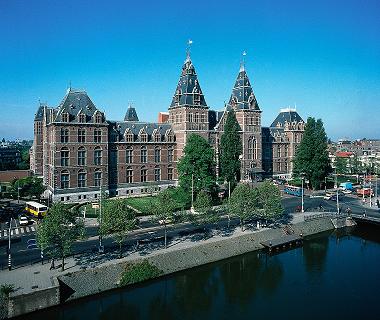
Rijksmuseum Amsterdam
The Rijksmuseum is the largest museum in the Netherlands, with more than a million visitors each year. The Rijksmuseum is a familiar Amsterdam landmark and possesses an unrivaled collection of Dutch art, from early religious works to the masterpieces of the Golden Age. The Rijksmuseum is internationally renowned for its exhibitions and publications and not only are these high quality products, but are also areas in which the museum extends the boundaries of scholarship and encourages new insights. 

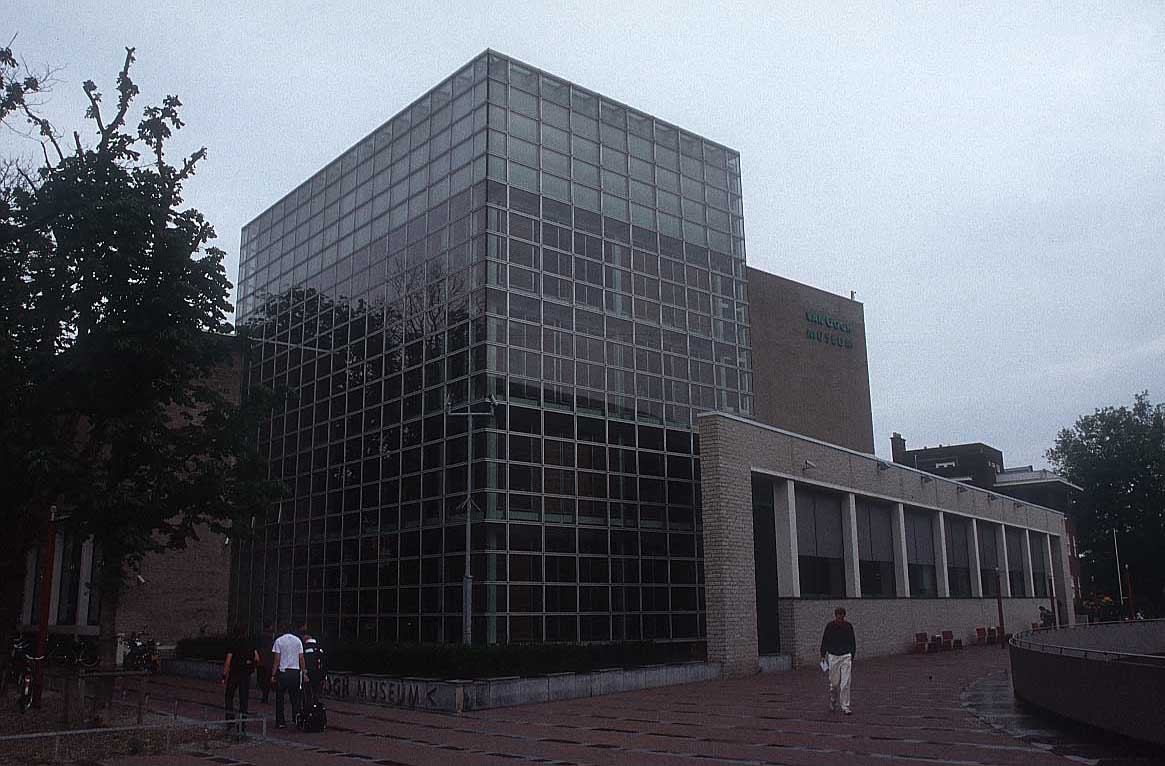
 Van Gogh Museum Amsterdam
The museum houses some 200 paintings and 550 sketches showing Van Gogh in all his moods. These combined with hundreds of letters by Van Gogh to Theo, and selected works by his friends and contemporaries, form the core of the museum's collection.

Oude Kerk
The origins of the Oude Kerk (Old Church) date from early 13th century, when a wooden church was built on a sandy burial ground. The present Gothic structure is 14th-century and it has grown from a single-aisled church into a basilica. 

Dam Square
Created in the 13th century when a dam was built around the river Amstel to prevent the Zuiderzee sea from swarming the city. During the sixties, the square was renowned for its Dam Square hippies, and the laid back and relaxed character of this densely pigeon populated square lives on. 


It would be a pleasure to meet the people of Amsterdam, a whole new perspective of living instilled in a laid-back society and a chance to get away from the hustle of everyday life in Singapore. For more useful information on Amsterdam, you can visit 'http://www.amsterdam.info/'.

Thursday, November 11, 2010

Reflection (Practical 7)

Stomp is a local website popular for providing the latest news and gossips of happenings around Singapore. It is a user-based website which generates chat discussions and topics from what it's users post, acting like a hybrid between a discussion forum and informative page. We had to visit Stomp during our lesson, familiarizing ourselves with the how citizen journalism works. Citizen journalism is basically the concept of members of the public community playing an active role in collecting and contributing news and information, and that is how and why Stomp snatches all the spotlight in our local internet popularity. Being a website totally organised and moderated by the common public, not necessarily having the need to be professional, allows everyday readers like us to instantly connect with the issues that are presented in the website. The encouragement of audience participation also gives readers a sense of authority and belonging, giving them the mindset of having an important role to play in the society.

However, each and every person has his/her individual views on every little thing on the face of the planet. And being a frequent patron of individuality, i feel that Stomp has a negative effect on the mindsets and behaviors of us Singaporeans. Using the topics posted on Stomp for instance, they are accurate examples of how Singaporeans think and how they approach issues, be it everyday ones or those of major priority. Stomp has become a representation of our petty complains and childish mindsets, ranging from irrelevant and miniscule posts about how people drive on the road to how teenagers dress skimpishly in public, all which i feel are a waste of time for those visitors who have an apt for actual news that makes a difference.

With that said, i've tried proving my point that a handful of Singaporeans have too much time on their hands, finding the need to stir up gossip and antagonize emotions just for the sake of public recognization. Afterall, we're all Singaporeans, and being in a country like this all our lives, these upsetting attitude of ours actually finds the frequent need for these sort of emotionally agravating issues.

Reflection (Practical 6)

Have you ever heard of the term 'invisible web'? Well, the class learnt all about invisible webs during our EIR lesson today. Invisible webs are websites that cannot be found using general search engines and subject directories like google or yahoo and this happens because certain types of online information are hidden. One of the reasons invisible webs happen because the requested information can only be viewed by authorized users, and these information may require log-in usernames and passwords in the form of forums and private websites. Some search engine specifically exclude such websites in their search results to avoid cluttering their databases with unwanted and irrelevant information, decreasing the proficiency and efficiency of their search results. Furthermore, the world wide web consists of billions of individual and organisational websites which search engines face as a huge problem if these billions of web pages are generated in their results. Creators of web pages also administer a special 'meta tag' that prevents his/her page from appearing in the results of search engines, allowing the search results to avoid displaying his/her page.

The invisible web is alot more efficient and relevant when it comes to searching for information on a specific and categorized topic. However, using such invisible databases require a certain amount of IT experience because of its lack of user-friendliness. Some search options require detailed information when it comes to entering a query into the search bar. Also, users have to find a relevant 'invisible web' to what they are looking for as some databases are dedicated to specific topics like news, technology or economy.

All in all, i will resort to using the invisible web more often when researching for information only when my query is of relevance to the chosen database. Otherwise, using such databases would only mean more work and less outcome, sometimes there wouldn't even be any results at all. Invisible webs require users to acquire a habit and understanding to fully make use of it to its fullest potential, and this might take awhile for me as general search engines like google offer a way simpler way of usage.

Wednesday, November 10, 2010

Reflection (Practical 4 and 5)

Today, we learnt all about meta search engines and search directories in class. A meta search engine is a website of compiled information from other various search engines like google, yahoo, etc. I never knew such a website existed until I tried it out myself, however, it was not as efficient as I thought it would be. Being a raw database of several other major search engines, I'd expected more relevant results and a more professional approach to the whole 'search engine' interface. The application of the website is similar to ordinary search engines, by accessing multiple web properties for each of my query, it provided me with a mix and match of several links for my results. I personally felt that a meta search engine was not what i prefered when it came to looking for information online, mainly because a wider spectrum of libraries meant more irrelevant search results, which will lead to a harder time filtering for what i wanted to find.

However, as compared to subject directories, it is a tad bit more convenient and user friendly. Although subject directories provide more in-depth information, it had to be on search queries specifically categorized in the website. For instance, if you wanted to search for a topic related to games, you woudn't yield any results unless there is a category stated on the website that listed information on it. Subject directories are for experienced users who know what kind of information they want to look for in relation to the relevance of their search queries. Thus far, it is still not my preferred type of search engine.

Another form of information sharing is through Wiki, where individuals like us could modify and edit information on the website to share with others. This type of informative webpage would only be effective if it consisted of a community of reliable users. Users could easily edit information on the website, which also meant vandals or people with nothing better to do could get their hands on the contribution of other hardworking and dedicated individuals, unruly modifying results to the extend of losing its relevance and authority.

This practical was an eye-opener for me, introducing me to alternative forms of online search engines. It has expanded my options for gathering information online, and this will most definitely help me as research is one of the most important steps in a design process.

Sunday, November 7, 2010

Reflection (Practical 3)

Practical 3 was a fairly simple exercise as it was aimed to polish and evaluate our internet understanding and how effectively we used online search engines. Given our research topics, mine being 'trends of spending habits of youth', we had to enter our respective queries into our chosen search engine. As explained in the previous post, I have been using Google whenever I had any research to do.

The class was taught alternative and more efficient ways of entering our search queries, which also meant they were more complicating and troublesome. As the saying goes, ''there's no such thing as a free lunch'', working harder only makes sense when you desire to obtain greater results. The main idea is to find an alternative word with the same meaning, for example, 'youth' has the same meaning as 'adolescence', accompanied by a couple of mandatory commands and you'll be on your way to your requested search results. e.g. Trends of spending habits of youth =
(trends OR direction*) AND (spending OR squandering*) AND (habit OR manner*) AND (youth OR adolescence*) 
 
I appreciate what I've learnt from this practical as it is skills like this that we can apply and use in our daily lives, not some useless junk that we're forced to learn, knowing we'd totally forget about it  the next day and never use ever again.

Sunday, October 31, 2010

Reflection (Practical 1 and 2)

We had our very first official lesson as a class due to some previous misunderstanding with the lesson timetable. For our first practical, the class learnt how to identify the 5 different purposes of online information sources, 'information, advocacy, news, business/marketing, entertainment'.

We had to use any online search engine of our choice to gather up information about our chosen topics, mine being the trends of spending habits of youths. 'Google' is my preferred search engine as it is one of the most common and recognized search engines on the web.

 For the practical, we had to identify a specific source for each category. Online information can be provided in different forms like journals/e-Magazines, blogs, discussion forums and organisational websites. We had to find information related to our topics and categorize them into their sources, after which we had to identify their purposes.

This excercise is benificial to us as it defines clearer understanding of where our information comes from and whether they are reliable or not, helping us in our research, which is crucial to us design students as it is the early steps of the design process.

Tuesday, October 26, 2010

$500 Shopping Spree

With $500 in my hands, i'll be at a total loss deciding what to buy as this was a chance to fulfill one of my many dreams. However, the Boss RC-50 Loop Station would most definitely be at the top of my list.


Being a music enthusiast with experience playing a range of musical instruments like the guitar, drums and the  digital keyboard, this addition to my collection of effects pedals and recording equipment opens a whole new world of musical experimentation for me. Even though im pretty sure that expanding my musical interests would be at the expense of my education because i'm sure i'll be spending alot of time with my newly bought effects pedal, its a risk i'm willing to take.

Sunday, October 24, 2010

Greetings,
 
              Im Phuay Hao majoring in the Diploma for Product and Industrial Design. I have an incomparable passion for chess and reading. My musical interests are in the likes of celine dion and luciano pavarotti, i feel that their exemplary image and attitude goes hand-in-hand with their apt for musical talent and understanding. 

The oprah winfrey show is one of my favourite television shows as opray winfrey is considerably one of the most down-to-earth celebrities despite her success, wealth and fame. Her attitude towards helping the less fortunate helps her secure a respectable image amongst her fans and compatriots alike.  I favor watching the morning news on channel 5 as well as it keeps me up to date with the latest news on topics like global warming, the status of the global economy, local and international governmental issues, as well as health related epidemics and the latest technological and medical advancements made by scientists.

School is at the top of my list when it comes to hanging out. It is where all my friends are and it is considered a 'checkpoint' in my daily life. Additionally, we are provided with excellent work resources like computers armed with the latest softwares, not forgetting a workshop with a wide range of equipment and a family of amazingly helpful working staff.